
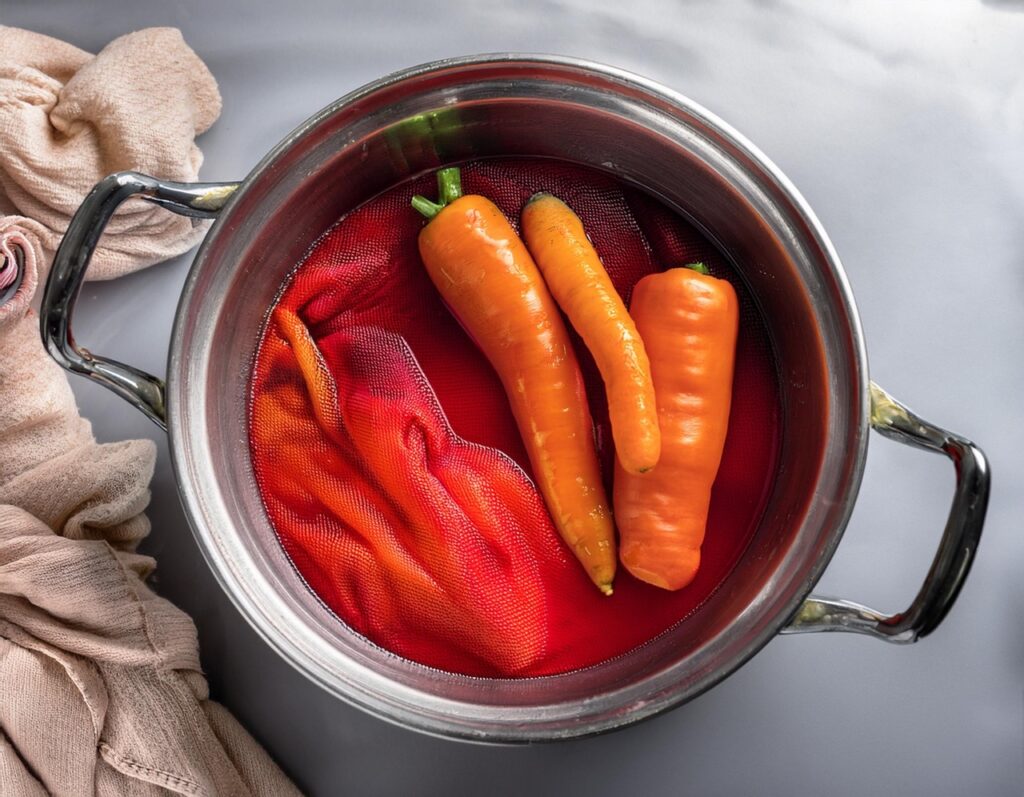
Why buy new when you can refresh your wardrobe with beautiful, natural colours? Making your own dye from plants, food scraps, and spices is an eco-friendly way to give old clothes a fresh look. Here’s how to create natural dyes and infuse your wardrobe with earthy, sustainable hues.
1. Choose Your Colour Source
Natural dyes can be made from everyday kitchen items and garden plants. Here are some ideas to get you started:
- Yellow: 15g turmeric powder, 2 large handfuls of onion skins
- Pink/Red: 2 beetroots (chopped), 3 avocado pits, 1 small red cabbage (chopped)
- Blue/Purple: 100g blueberries or blackberries
- Orange: Tops of 2-3 carrots, 2 tablespoons paprika
- Green: Large handful of spinach leaves, parsley stems
- Brown: 50g coffee grounds, 4 black tea bags
2. Prepare the Dye
For each colour, use approximately 250ml water per 50g of plant material.
- Method: Place your chosen dye source in a large pot, add water, and bring to a boil. Reduce the heat and simmer for about 1 hour until you achieve a rich colour. Strain the dye into a large bowl, discarding the plant material.
3. Pre-Treat Your Fabric
Natural fabrics like cotton, linen, and silk work best for natural dyes. Pre-treating (or mordanting) the fabric helps the dye set and last longer.
- Alum Mordant (suitable for most colours): Dissolve 1 tablespoon of alum powder in 1 litre of hot water. Soak the fabric in the solution for 1 hour, then rinse and squeeze out excess water.
- Salt Mordant (suitable for berry-based dyes): Dissolve 1 tablespoon of salt in 1 litre of water. Soak the fabric for 1 hour, rinse, and squeeze out excess water.
4. Dye Your Fabric
- Submerge: Place the damp fabric in the dye pot, making sure it’s fully submerged.
- Simmer: Heat gently and simmer for 30 minutes to 1 hour, stirring occasionally to ensure even colouring. The longer it simmers, the richer the colour.
- Let it Cool: Remove from heat and allow the fabric to sit in the dye overnight for a deeper colour.
5. Rinse and Dry
Rinse the fabric with cool water until the water runs clear. Hang it to air dry, away from direct sunlight to preserve the colour.
Colour Tips & Tricks
- Experiment: Try mixing dye sources for custom colours! Red cabbage with a pinch of bicarbonate of soda, for example, can yield beautiful shades of green.
- Layer Dyes: If one dip isn’t vibrant enough, repeat the process until you reach your desired hue.
- Natural Colour Variations: Each plant produces a slightly different shade, so embrace the uniqueness of natural dyes!