
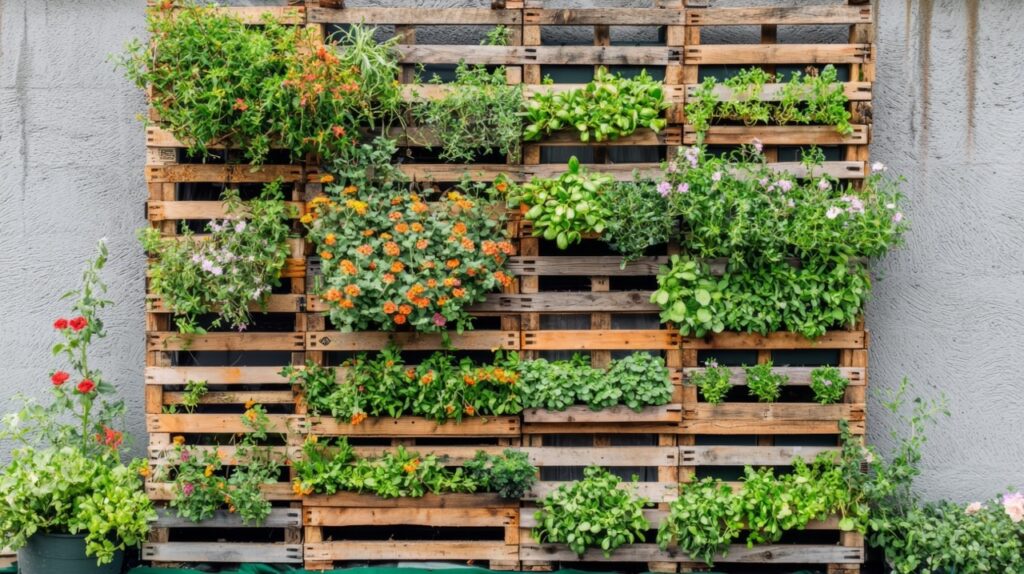
A vertical garden is a fantastic way to maximise growing space, especially if you have a small balcony, patio, or even just a sunny wall indoors. Not only does it bring fresh herbs, veggies, or flowers into your home, but it also adds a lush, green touch to any space. Here’s how to create your own DIY vertical garden in the UK.
1. Choose Your Vertical Garden Structure
Vertical gardens can take many forms, depending on your space, budget, and style. Here are a few easy-to-create options:
- Wooden Pallets: Repurpose a wooden pallet by attaching plant pots to it or adding fabric or pockets to hold soil.
- Hanging Pots: Install a simple ladder shelf or railing system and hang pots from hooks.
- Shoe Organiser: Use a cloth shoe organiser hung on a wall or fence; each pocket can hold a small plant.
- Wall Planter Kits: Purchase ready-made vertical planters, which often come with built-in watering systems for ease of use.
2. Choose the Right Plants
Select plants suited to vertical gardening and your climate. Some great choices include:
- Herbs: Basil, thyme, parsley, and chives grow well in small pots and are easy to harvest.
- Leafy Greens: Lettuces, spinach, and rocket work well in shallow containers.
- Strawberries: Perfect for hanging planters and will trail beautifully as they grow.
- Flowers: Marigolds, nasturtiums, and pansies add colour and are also edible!
3. Find the Ideal Location
A vertical garden needs the right amount of light and protection from the elements.
- Sunlight: Place your garden where it will get at least 4-6 hours of sunlight daily. South-facing walls are ideal.
- Wind Protection: If your garden is exposed to high winds, consider adding a barrier, as windy conditions can dry out the plants quickly.
- Indoor Placement: For indoor vertical gardens, make sure the location has plenty of natural light, or supplement with a grow light.
4. Use Quality Potting Soil
Choose a good-quality, lightweight potting soil to ensure that your plants have enough nutrients and moisture. Avoid heavy garden soil, which can become compacted in vertical containers.
- Moisture Control: Consider mixing in perlite or coconut coir to improve moisture retention and drainage.
5. Set Up a Watering System
Vertical gardens can dry out faster than traditional garden beds, so regular watering is essential.
- Hand Watering: Use a small watering can or spray bottle to gently water each level, especially focusing on the top layers, as water will trickle down.
- Drip Irrigation: For larger vertical setups, a simple drip irrigation system can make watering easier and more efficient.
- Self-Watering Pots: Consider self-watering containers if your vertical garden doesn’t allow easy access.
6. Plant Carefully
When planting in a vertical setup, start with the lowest rows and work upward to prevent disturbing the soil in lower containers.
- Spacing: Leave space for plants to spread as they grow. Herbs and leafy greens can be closely planted, while fruiting plants like strawberries need a bit more room.
- Plant Depth: For most herbs and veggies, a depth of 15-20cm for soil is sufficient.
7. Add Mulch to Retain Moisture
To keep soil moist and prevent rapid drying, add a thin layer of organic mulch, like straw or coco coir, on top of the soil.
- Tip: Mulch will help maintain soil temperature and reduce water evaporation, making it especially useful in hot weather.
8. Fertilise Regularly
Since vertical gardens often have limited soil, regular fertilising keeps plants healthy and productive.
- Organic Fertiliser: Use a liquid organic fertiliser every 3-4 weeks during the growing season for a nutrient boost.
- Compost: Add a thin layer of compost once a month to replenish nutrients and improve soil quality.
9. Rotate and Prune for Healthy Growth
To make the most of your space, rotate plants as they grow, and prune regularly to keep them thriving.
- Pruning: Remove dead or overgrown leaves to encourage healthy growth.
- Rotating: Turn pots or planters around once a week for even sunlight exposure.
10. Add a Personal Touch
Make your vertical garden your own by customising it to suit your style. Paint the pallet, choose colourful pots, or add decorative labels for each plant.
Creating a vertical garden is a fun, creative way to bring greenery to any space, small or large. With a little planning and care, you’ll have a thriving, compact garden that’s both beautiful and practical. Happy growing! 🌱🌿