
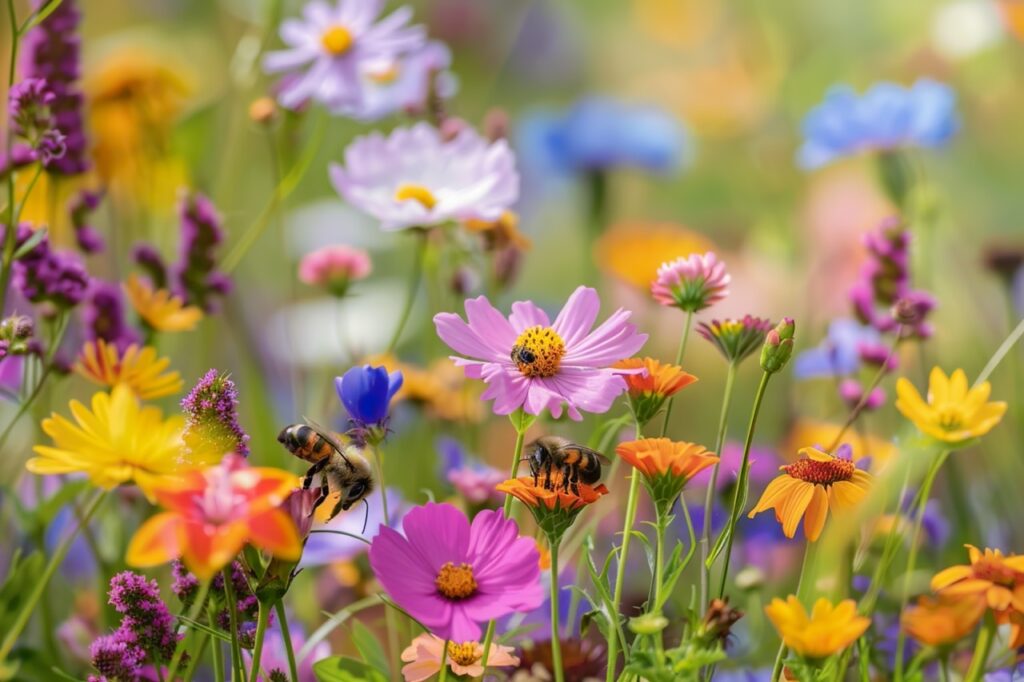
A pollinator garden is a beautiful way to support bees, butterflies, and other vital insects. By planting a variety of flowers and providing a welcoming habitat, you’ll encourage these essential creatures to thrive, supporting biodiversity and helping plants (including your own veggies) flourish. Here’s how to create a vibrant pollinator-friendly garden.
1. Choose Native Flowers
Native plants are particularly beneficial for local pollinators as they’ve adapted to the environment and require less maintenance.
- Examples: Lavender, foxglove, primrose, and wild marjoram are excellent options.
- Tip: Look for plants labelled as “wildflower” or “native” at garden centres.
2. Plant a Mix of Flower Shapes and Colours
Pollinators are attracted to different shapes, colours, and sizes, so variety is key.
- Flat Flowers: Daisy-like flowers, such as asters and coneflowers, provide a landing pad for butterflies.
- Tubular Flowers: Foxgloves and honeysuckle attract bees with their long proboscis.
- Colours: Pollinators love vibrant colours like purple, yellow, pink, and blue. Plant a mix to attract a variety of species.
3. Provide Year-Round Blooms
A continuous supply of flowers ensures that pollinators have food throughout the seasons.
- Early Spring: Primroses, crocuses, and snowdrops are great for early nectar.
- Summer: Lavender, foxglove, and cosmos offer abundant blooms.
- Autumn: Sedum, asters, and heather provide late-season nourishment.
- Winter: Mahonia and hellebores offer essential food in colder months.
4. Create Layers for Habitat Variety
Different layers of plants provide diverse habitats, appealing to various pollinators.
- Tall Plants: Sunflowers and foxgloves create height.
- Medium Shrubs: Lavender, rosemary, and sage add volume.
- Ground Covers: Thyme and creeping phlox offer low-growing shelter.
5. Go Pesticide-Free
Pesticides are harmful to pollinators, so avoid chemical treatments.
- Alternative Solutions: Use organic pest control methods like neem oil, companion planting, and encouraging natural predators (like ladybirds).
- Healthy Soil: Build a thriving garden with compost and mulch to keep plants healthy and less susceptible to pests.
6. Provide Water and Shelter
Pollinators need both water and shelter to thrive.
- Water Source: Create a shallow water dish with small stones or pebbles for pollinators to safely land and drink.
- Shelter: Plant dense shrubs or create a small “wild corner” with fallen leaves and sticks where pollinators can rest.
7. Group Flowers in Clumps
Plant flowers in clumps rather than scattered throughout the garden to make it easier for pollinators to find them.
- Clumping Tips: Group similar plants together in blocks of three or more. This attracts pollinators more effectively and allows them to forage with less energy.
8. Add Pollinator-Friendly Herbs
Herbs are a great addition to pollinator gardens, providing food for both you and the pollinators.
- Herb Options: Sage, thyme, chives, and oregano attract bees and butterflies and can be harvested for your own use.
- Flowering Herbs: Let some of your herbs flower to boost the garden’s food sources.
9. Include Night-Blooming Plants
Moths and bats are nighttime pollinators, so add a few night-blooming plants to attract them.
- Night-Bloomers: Evening primrose, jasmine, and nicotiana are great for attracting nocturnal pollinators.
- Tip: These blooms add fragrance and beauty to your garden in the evening, enhancing the atmosphere.
10. Track Your Pollinator Visitors
Keep a small journal to track which pollinators visit your garden. It’s a fun way to learn more about the wildlife around you and see the impact of your pollinator garden.
Creating a pollinator garden is a beautiful way to support local ecosystems and bring beneficial insects into your space. Enjoy the buzz and flutter of life as your garden fills with colour, fragrance, and movement! 🦋🌻